Negative Google Reviews: What Should You Do to Protect Your Reputation?
You’ve worked hard to build your business.
You’ve delivered good service, looked after your customers and earned positive feedback.
Then one day, you open your Google Business Profile and discover something nobody enjoys seeing.
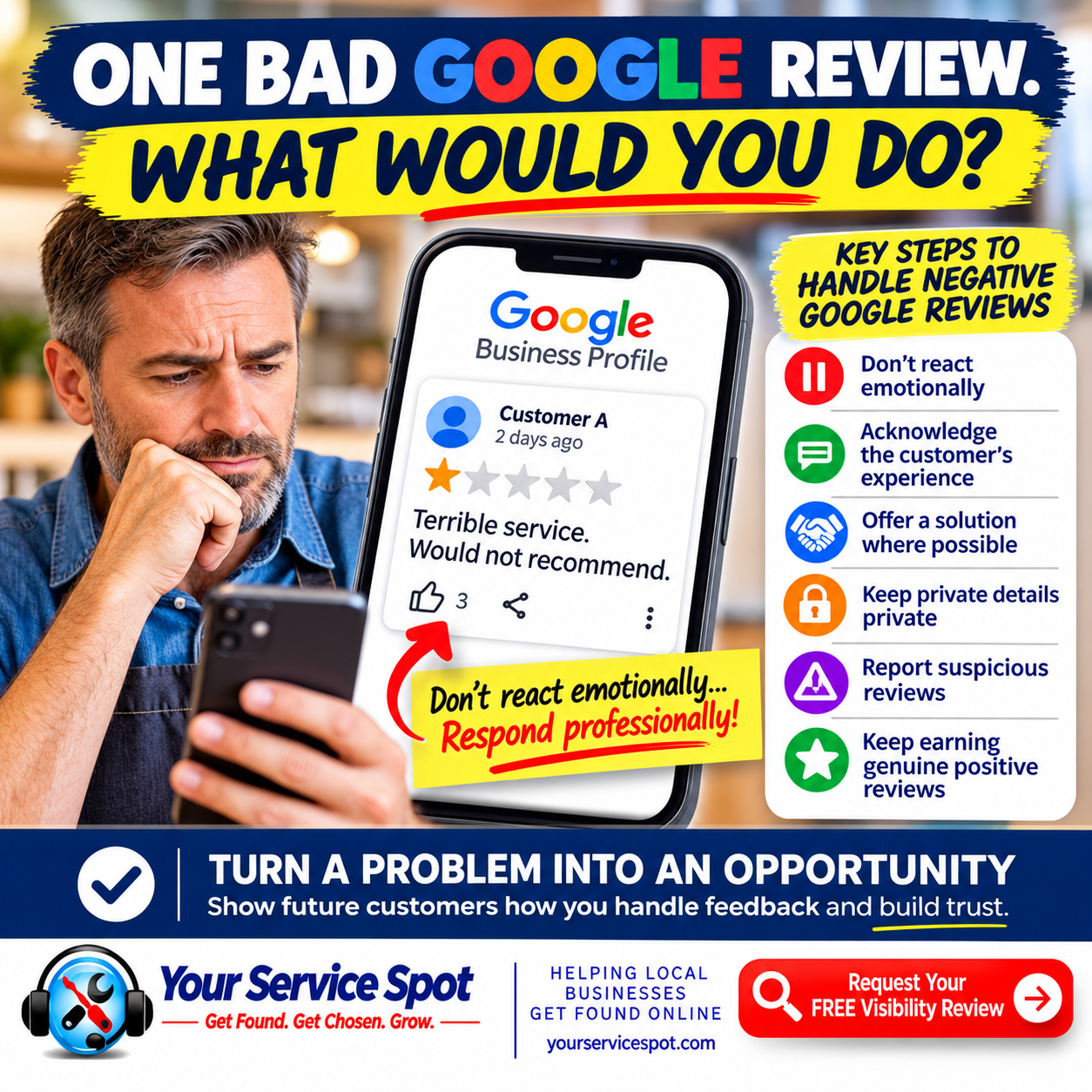
A one-star review:
- Perhaps the customer has a genuine complaint.
- Perhaps there’s been a misunderstanding.
- Or perhaps you don’t recognise the reviewer at all.
Whatever the circumstances, negative Google reviews can be frustrating, especially when you know potential customers may read them before deciding whether to contact you.
But here’s something worth remembering:
One negative review doesn’t automatically ruin your reputation.
What matters is how you respond, how you handle the underlying issue and what the overall customer experience says about your business.
Effective reputation management isn’t about pretending criticism doesn’t exist.
It’s about dealing with it professionally, learning where appropriate and continuing to build customer confidence.
Let’s look at what to do when your business receives a negative Google review.
-
Don’t Panic or Respond Emotionally
Your first reaction to a negative review might be anger, disappointment or disbelief.
That’s understandable.
Particularly if you believe the criticism is unfair.
But responding immediately while you’re upset is rarely a good idea.
An emotional reply can turn a relatively small problem into a much more public disagreement.
Instead, take a little time to investigate.
Ask yourself:
- Do we recognise the customer?
- What actually happened?
- Was there a misunderstanding?
- Did something go wrong?
- Have we already tried to resolve the issue?
- What would a potential customer think when reading our response?
Remember, your reply is public.
You’re not simply answering the reviewer. You’re demonstrating how your business handles criticism.
For more guidance on writing professional replies, see our article How to Respond to Google Reviews.
-
Acknowledge the Customer’s Experience
One of the biggest mistakes businesses make is becoming defensive:
- A customer complains.
- The business immediately explains why the customer is wrong.
- The conversation becomes an argument.
- And everyone else can see it.
A better approach is to acknowledge the customer’s dissatisfaction without necessarily agreeing with every detail.
For example:
We’re sorry to hear that you were disappointed with your experience. We’d appreciate the opportunity to understand what happened and see whether we can help.
This shows concern without automatically accepting responsibility for something that may be disputed.
What if the customer is genuinely unhappy?
Listen carefully.
If your business made a mistake, acknowledging it and taking appropriate action can demonstrate accountability.
Customers don’t necessarily expect businesses to be perfect.
They do, however, want to feel that their concerns are taken seriously.
-
Respond Professionally and Keep It Brief
Your public response doesn’t need to be a lengthy explanation.
In fact, shorter responses are often more effective.
A useful approach is:
ACKNOWLEDGE → STAY PROFESSIONAL → OFFER HELP → TAKE THE DISCUSSION OFFLINE
For example:
Thank you for your feedback. We’re sorry your experience didn’t meet expectations. We’d like the opportunity to understand what happened and see whether we can help. Please contact us directly so we can discuss this further.
Notice what this response doesn’t do:
- It doesn’t argue.
- It doesn’t blame the customer.
- It doesn’t disclose private information.
- And it doesn’t make promises the business may be unable to keep.
Instead, it shows future customers that the business is willing to listen.
-
Take Complicated Disputes Offline
Some complaints are too complicated to resolve through a public review response.
Perhaps there’s a disagreement about the work completed.
Maybe a customer is unhappy about a charge.
Or perhaps the situation involves information that shouldn’t be discussed publicly.
In those circumstances, invite the customer to contact your business directly.
For example:
We’re sorry to hear about your concerns. We’d like to investigate this properly. Please contact our office directly so we can review the situation with you.
Where possible, provide an appropriate telephone number or email address.
Why is this important?
Because a public argument rarely helps your reputation.
Taking the discussion offline allows both parties to explain the situation in more detail.
It also demonstrates that your business is prepared to address concerns constructively.
Good reputation management means solving problems, not winning arguments.
-
Never Share Private Customer Information
This is particularly important when responding to negative Google reviews.
You may be tempted to defend your business by publishing details about a customer’s appointment, payment, medical situation, property or other circumstances.
Don’t.
A public review response isn’t the place to disclose confidential or sensitive information.
Even if the customer has shared certain details themselves, that doesn’t automatically mean your business should publish additional information.
Keep responses professional and direct sensitive discussions into an appropriate private channel.
-
What If the Google Review Is Fake?
Not every negative review comes from a genuine customer experience.
Occasionally, businesses receive reviews they don’t recognise.
Some may be mistaken.
Others may be spam, impersonation or otherwise violate Google’s policies.
But be careful about assuming a review is fake simply because you disagree with it.
What should you do?
First, check your records.
Try to establish whether the reviewer might have contacted your business under another name or through somebody else.
If you genuinely cannot identify the experience, you could respond:
Thank you for your feedback. We’re unable to identify an experience matching the details provided. We’d welcome the opportunity to investigate, so please contact us directly with further information.
If you believe the review violates Google’s policies, you can report it through Google’s review-management tools.
However, Google doesn’t remove reviews simply because they’re negative or because a business disputes the customer’s account.
A review generally needs to violate an applicable policy to qualify for removal.
We’ll cover the reporting process in more detail below.
-
How to Report an Inappropriate Google Review
If you believe a review violates Google’s policies, you can flag it for investigation.
The process generally involves:
- Opening your Google Business Profile or Google’s review-management interface.
- Finding the review you believe violates policy.
- Selecting the option to report it.
- Choosing the most appropriate reason.
- Submitting the report and monitoring its status.
Depending on the review and available tools, you may have an option to appeal an initial decision.
Examples of potentially reportable content can include spam, certain conflicts of interest, harassment and other policy violations.
But remember:
A one-star rating is not, by itself, a policy violation.
And a review that seems unfair isn’t necessarily removable.
Don’t build your reputation management strategy around trying to remove every critical review.
Build it around delivering good service and responding professionally.
-
Don’t Offer Incentives to Remove Negative Reviews
Imagine a customer leaves a poor review.
You offer them a discount, refund or free service on the condition that they remove it.
That creates a problem.
Google’s policies prohibit offering incentives in exchange for reviews, changes to reviews or removal of negative reviews.
Instead, address legitimate customer concerns because resolving problems is the right thing to do.
If a customer later chooses to update their review voluntarily, that’s their decision.
Don’t pressure them.
Your reputation should reflect genuine customer experiences.
-
Keep Earning Genuine Positive Google Reviews
One negative review can feel enormous when your business only has a handful of reviews.
But a broader collection of genuine customer feedback gives potential customers more context.
For example, imagine two businesses.
Business A has four reviews, including one very negative experience.
Business B has 80 reviews representing a wide range of genuine customer experiences, most of them positive.
A potential customer has considerably more information available when evaluating Business B.
That doesn’t mean negative reviews should be ignored.
It means your business shouldn’t stop building its reputation after receiving criticism.
Encourage satisfied customers to share honest feedback.
Make the review process straightforward.
And respond professionally to both positive and negative comments.
If you’d like to understand how reviews fit into a wider local search strategy, read Why Google Reviews Matter for Local SEO.
-
Respond to Positive Reviews Too
Some businesses only respond when somebody complains.
But what message does that send?
Your happy customers have also taken the time to share their experiences.
Thanking them demonstrates appreciation.
A simple response might be:
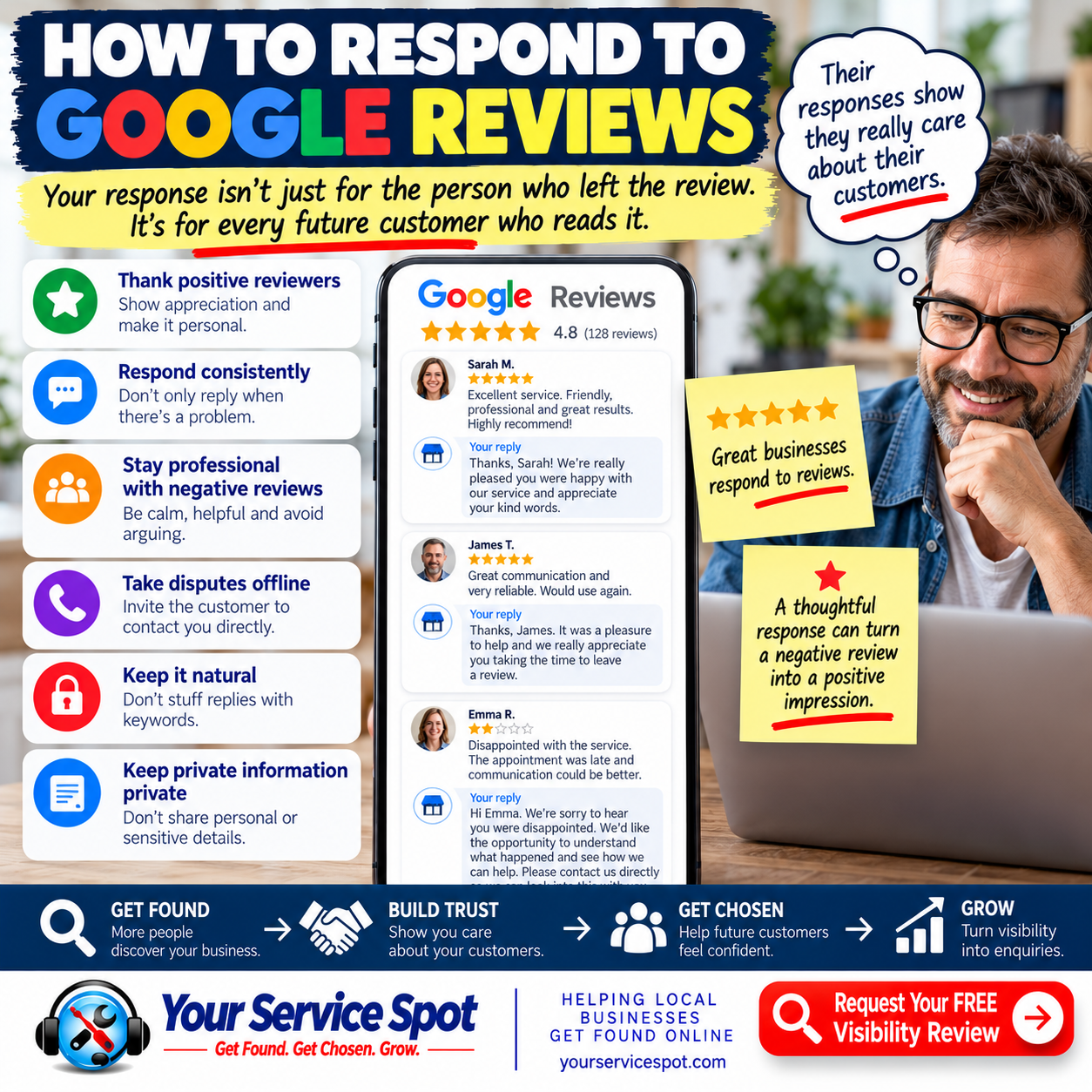
Thank you, Sarah. We’re delighted you were pleased with our service and really appreciate you taking the time to recommend us.
Responding consistently also helps create a more welcoming and professional impression across your Google Business Profile.
Remember:
Reputation management isn’t just about dealing with problems. It’s about recognising positive customer experiences too.
Your Google Business Profile should work alongside your website and wider local SEO strategy.
For additional ideas, see How Often Should You Update Your Google Business Profile?
-
Look for Patterns in Negative Feedback
One negative review may represent an isolated incident.
Several reviews raising the same concern could indicate something worth investigating.
For example, customers might repeatedly mention:
- Delayed responses to enquiries
- Missed appointments
- Unclear pricing
- Poor communication
- Unexpected charges
- Difficult booking processes
- Problems after a service
These patterns can provide useful information about the customer experience.
Perhaps your business needs a clearer appointment-confirmation process.
Maybe customers need more information before booking.
Or perhaps your website isn’t explaining pricing or services clearly enough.
That’s where reputation management becomes more than a marketing activity.
Customer feedback can help you improve the business itself.
And those improvements can influence future reviews, recommendations and customer retention.
-
Remember That Potential Customers Are Watching
This is the most important point in the article.
Imagine somebody searching Google for a local business:
- They find two companies offering similar services.
- Both have good overall ratings.
- Both have some negative reviews.
- But the responses are very different.
- Business A replies defensively, criticises reviewers and argues publicly.
- Business B responds calmly, acknowledges concerns and offers to investigate.
- Which business would you feel more comfortable contacting?
The answer won’t be identical for everyone, but the responses provide valuable clues about how each company treats customers.
That’s why negative Google reviews can become opportunities to demonstrate professionalism.
You cannot control everything people say about your business.
You can control how your business responds.
And that matters when potential customers are deciding whom to trust.
Building trust is also essential once customers reach your website. Our guide How to Make Your Website Convert More Visitors Into Leads explains how to turn that confidence into enquiries.
-
Make Reputation Management Part of Your Routine
Don’t wait until something goes wrong before paying attention to your reviews.
Create a straightforward review-management routine.
For example:
- Check for new reviews regularly.
- Respond to genuine feedback promptly and professionally.
- Investigate complaints where necessary.
- Report reviews that appear to violate Google’s policies.
- Encourage honest feedback from customers.
- Monitor recurring compliments and complaints.
- Review your overall Google presence periodically.
For small businesses, consistency is often more valuable than an occasional burst of activity.
And reviews are only one part of the bigger picture.
Your website, Google Business Profile, local content and online reputation should support one another.
Our Local SEO Checklist for Small Businesses provides a practical way to review these areas together.
Common Mistakes to Avoid With Negative Google Reviews
Here’s a quick checklist.
❌ Responding while angry
❌ Arguing with reviewers publicly
❌ Ignoring legitimate complaints
❌ Copying the same response beneath every review
❌ Revealing private customer information
❌ Accusing reviewers of lying without evidence
❌ Offering incentives to remove negative reviews
❌ Trying to force keywords into review responses
❌ Ignoring positive reviews
❌ Assuming every negative review can be removed
Instead:
✅ Stay calm.
✅ Investigate the facts.
✅ Respond professionally.
✅ Offer appropriate help.
✅ Protect customer privacy.
✅ Learn from recurring feedback.
✅ Keep building a genuine review profile.
Negative Reviews Don’t Have to Define Your Business
Every business wants happy customers.
But even businesses that consistently deliver excellent service may occasionally receive criticism.
The objective isn’t to create an unrealistic picture in which nothing ever goes wrong.
It’s to demonstrate that your business takes customer service seriously.
Think about the complete customer journey:
GET FOUND → BUILD TRUST → GET CHOSEN → GENERATE AN ENQUIRY
Your Google reviews can influence that journey.
So can your responses.
A thoughtful reply may help a future customer feel more confident contacting your business.
And a professional approach to criticism can demonstrate something no advertising slogan can prove on its own:
How your business behaves when things don’t go according to plan.
Are Negative Google Reviews Affecting Your Business?
When did you last look at your Google Business Profile through the eyes of a potential customer?
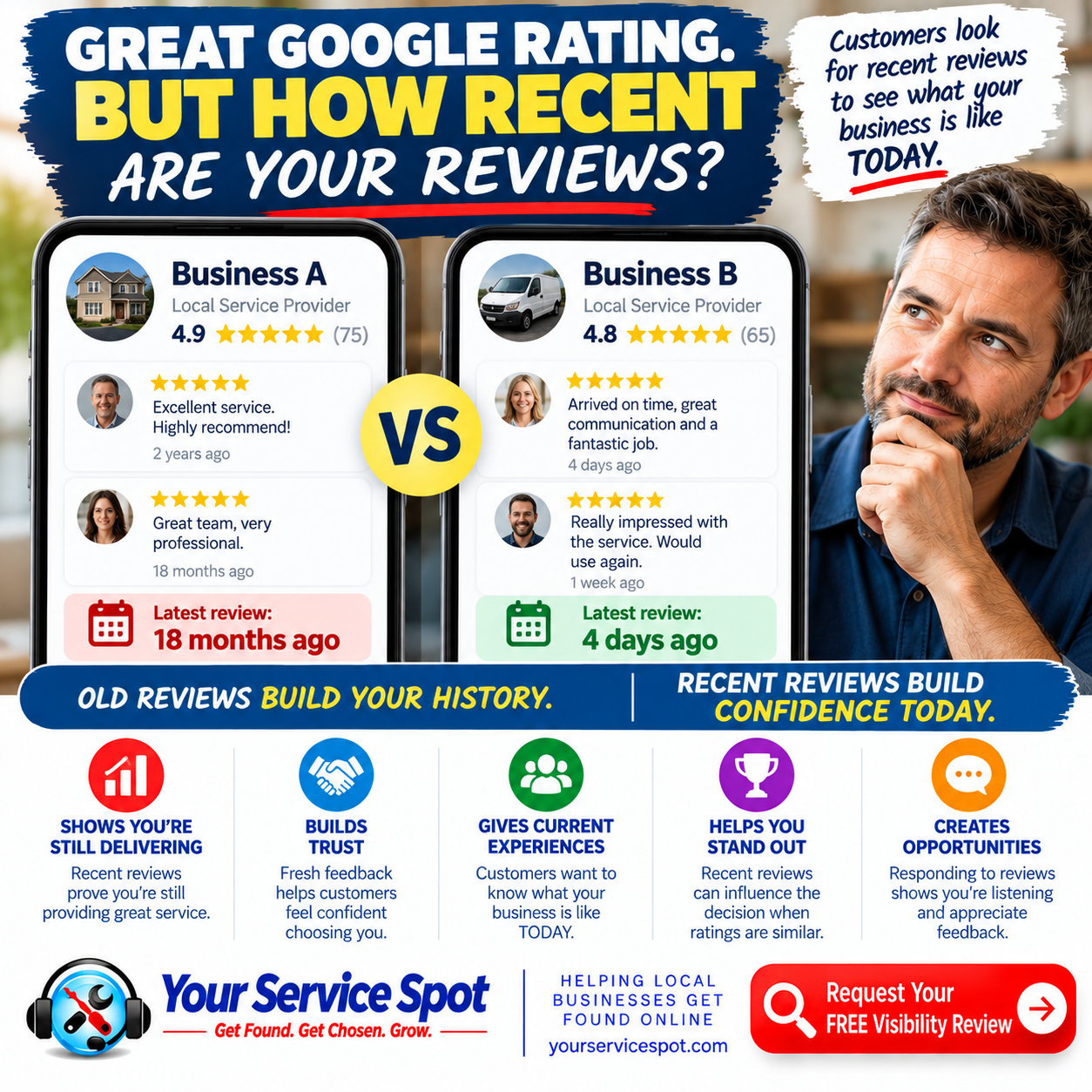
Are your reviews recent?
Are you responding consistently?
Are negative reviews handled professionally?
Does your profile inspire confidence?
At Your Service Spot, we help local businesses identify opportunities to improve their Google presence, online reputation and overall visibility.
Request Your FREE Visibility Review
Discover where your business could improve its Google visibility, strengthen customer confidence and create more opportunities for enquiries.
Get Found. Get Chosen. Grow.
Frequently Asked Questions About Negative Google Reviews
Can negative Google reviews damage my business?
Negative Google reviews can influence how potential customers perceive your business, particularly if complaints go unanswered or reveal recurring problems. However, one negative review doesn’t automatically ruin your reputation. A professional response and a strong history of genuine customer feedback can provide important context.
Should I respond to every negative Google review?
Responding to genuine negative reviews is generally good practice. Keep your response polite, acknowledge the concern and offer an appropriate way to resolve the issue. Avoid public arguments or sharing private customer information.
Can I remove a negative Google review?
Business owners cannot directly delete reviews left by customers. However, you can report reviews that appear to violate Google’s policies. Google assesses reported reviews and may remove those that breach its rules.
How do I report a fake Google review?
Open your Google Business Profile, select Read reviews, locate the review and choose Report. Select the appropriate reason and submit your report. You can check the status through Google’s Reviews Management Tool and may be eligible for a one-time appeal if your initial report is unsuccessful.
What should I say when responding to a one-star review?
Keep your response calm and professional. Acknowledge the customer’s dissatisfaction, avoid arguing and offer to investigate the problem. For example:
We’re sorry to hear that your experience didn’t meet expectations. We’d appreciate the opportunity to understand what happened and see whether we can help. Please contact us directly.
What if a negative review is unfair?
Investigate the facts before responding. If you disagree with the review, explain your position politely without accusing the reviewer or revealing confidential information. Remember that future customers may read your response.
Should I offer a refund to remove a negative Google review?
You can offer appropriate remedies to resolve genuine customer problems, but don’t make compensation conditional on removing or changing a review. Google prohibits incentives offered in exchange for review changes or removal.
Can negative Google reviews affect local SEO?
Google reviews contribute to a business’s online reputation and can influence customer decisions. Google also considers review-related signals within its broader local ranking systems. However, one negative review doesn’t automatically cause a ranking drop, and review responses shouldn’t be treated as a shortcut to higher rankings.
How quickly should I respond to a negative review?
Aim to respond promptly, but don’t rush an emotional or uninformed reply. Take enough time to investigate the complaint and prepare a professional response. A thoughtful reply is generally better than an immediate argument.
What is reputation management?
Reputation management involves monitoring customer feedback, responding professionally, addressing complaints, encouraging genuine reviews and maintaining a trustworthy public image. For local businesses, Google reviews are an important part of that process.